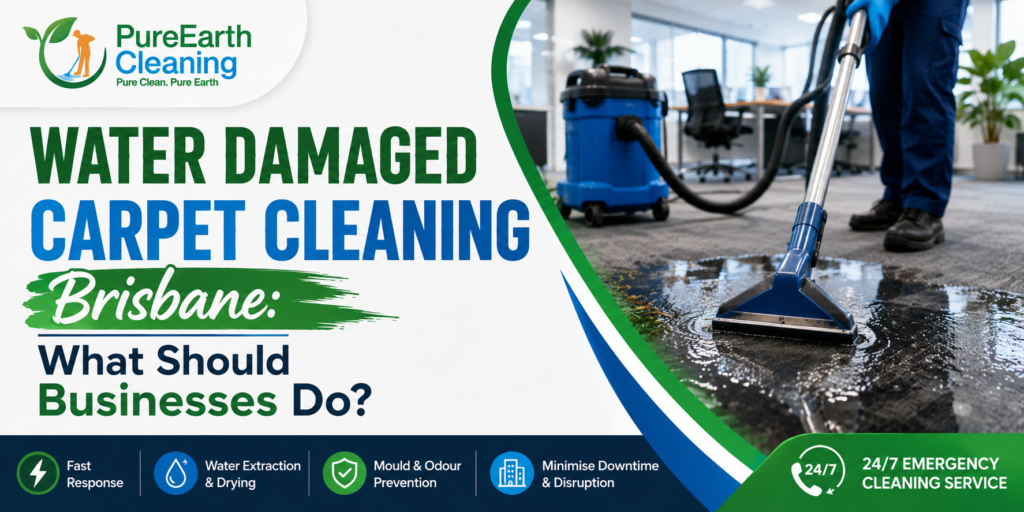
Companies that handle water-damaged carpets must first shut off the water source where it is safe to do so, designate the damaged area as restricted, guard equipment around it, and arrange expert testing as soon as possible. Remedial water damaged carpet cleaning Brisbane can include water removal and cleaning (plus controlled drying), odor treatment, inspection, and evaluation of the carpet and underlay.
Nevertheless, sewage-, floodwater-, and long-term-saturation-affected carpets, or carpets with significant structural moisture, may require sewage-, floodwater-, or long-saturation-related water-damage treatment instead of regular carpet cleaning.
An overflowing pipe, leaking machine, roof leak, overflowing fitting, stormwater seepage, or a plumbing issue can saturate a commercial carpet without much notice. The apparent wet spot on the surface may be due to moisture between the carpet and underlay or even in adjacent building materials.
Proper assessment should take priority over simply treating the carpet to make it appear dry. Prompt action can help businesses limit further damage, reduce operational disruption, and evaluate whether the carpet can be preserved through professional cleaning or more comprehensive cleaning.
Why water damaged carpet cleaning Brisbane Need Fast Attention?
Water stains are distinct from carpet. Water may have penetrated beyond the visible damage and become trapped under the carpet fibers, and any delay can be costly.
Moisture Can Spread Beyond the Visible Area
The wet section you can see may not represent the full extent of the problem. Water can migrate through carpet backing, underlay, adjoining flooring, skirting areas, and other porous materials.
Professional commercial water extraction Brisbane helps determine how much water is present and which areas require attention before cleaning and drying begin.
Odours Can Develop
Damp carpet and underlay may pick up unpleasant odors. Spraying over the affected area with a deodorizer will only cover up the symptom but will not deal with the sticky trapped moisture or contamination.
Flooring Materials May Deteriorate
Prolonged exposure to moisture may adversely affect carpet backing, adhesives, underlay, and insulation materials. Early evaluation makes it easier to determine what can be cleaned, dried, or reasonably restored.
Business Operations Can Be Disrupted
Wet floors can even oblige businesses to close meeting rooms, workstations, corridors, reception areas, or even customer areas. Quick action can mitigate delays by establishing an appropriate recovery plan sooner.
What Should Businesses Do Immediately After Carpet Water Damage?
The first few actions should focus on safety, containment, and preventing additional water from entering the affected area.
1. Identify and Stop the Water Source
Once you’ve found a safe source, prevent further water intrusion into the property. This could be switching off a home appliance or calling in an emergency repair to a plumbing or construction issue.
Do not enter a place where water could have come into contact with electrical devices or other areas that pose safety threats. Appropriate emergency professionals should handle those situations.
2. Restrict Access to the Wet Area
Avoid keeping employees, customers, and visitors on soaked carpet. Foot traffic may spread dampness and contamination to uninfected areas and create unnecessary risks at work. Close the area or cover it with proper barriers or signs until it is surveyed.
3. Protect Business Equipment Where Safe
Clear movable furniture, documents, inventory, and machinery out of the impacted zone where safe to do so. Do not assume it is safe to move electrical equipment in a wet setting.
4. Document the Damage
Take photos of the affected carpet, the surrounding area, and the visible source of water prior to significant cleanup. Internal records, landlords, facility managers, or an insurance process may find documentation helpful.
5. Arrange Professional Assessment
Contact a suitable provider for water damaged carpet cleaning Brisbane or specialist water-damage remediation depending on the source and severity of the incident.
Explain when the damage occurred, what caused it, approximately how much carpet is affected, and whether the water could be contaminated.
Can Water-Damaged Commercial Carpet Be Saved?
Not every wet carpet needs replacing, but not every carpet should be restored either. Several factors determine whether professional commercial carpet restoration Brisbane is appropriate.
Source of the Water
Completely clean water of specific supply-line spills poses other concerns than sewage, wastewater, or tainted floodwater. The water source plays a major role in determining the appropriate response.
Duration of Exposure
The larger the carpet, underlay, and surrounding materials that remain wet, the greater the risk of further deterioration and microbial growth. Blistering evaluation is thus significant.
Carpet and Underlay Condition
A newly acquired commercial carpet in good condition is a better candidate for restoration than a carpet that has been worn, damaged, or contaminated.
Extent of the Damage
A small, localized incident is quite different from damage covering a significant part of a commercial floor or large rooms.
Materials Beneath the Carpet
Although the carpet surface may be restorable, the underlay, adhesive, subfloor, and adjacent building materials may need extra attention.
What Does Professional Water Damaged Carpet Cleaning Include?
The exact process depends on the incident. A professional water damaged carpet cleaning Brisbane should determine which services are appropriate rather than applying the same procedure to every water-damaged carpet.
Water Extraction
Proper equipment can remove excess water from carpeted areas. Optimized extraction reduces the amount of water to be removed by drying.
Carpet Assessment and Cleaning
Once excess water is removed, the carpet is evaluated for contamination, staining, odor, and physical damage, and a suitable cleaning procedure is chosen.
Controlled Drying
Professional wet carpet drying Brisbane may involve commercial air-moving and dehumidification equipment where appropriate. Drying requirements depend on the extent of moisture and affected materials.
Odour Treatment
If there are odors, their cause must be addressed. It is better to clean and address moisture than to simply add fragrance.
Final Inspection
The carpet and other affected areas must then be re-evaluated to determine whether additional cleaning, drying, repair, or professional remediation is necessary.
When Is Standard Carpet Cleaning Not Enough?
This distinction matters. A commercial carpet cleaner should not pretend that every water incident can be solved with extraction and cleaning.
Sewage or Contaminated Water Is Involved
Carpets exposed to sewage, wastewater, or potentially hazardous floodwater require specialist assessment and remediation procedures. Standard office carpet cleaning Brisbane is not an adequate response.
Water Has Reached Building Materials
Walls, structural flooring, insulation, or other building materials can become damp inside and may require days of specialized water-damage restoration that goes beyond ordinary carpet cleaning.
Large Areas Have Been Saturated
Large-scale flooding over large commercial real estate can demand a team effort of water removal, moisture detection, drying process, repair and possibly removal of damaged goods.
Mould or Suspected Microbial Growth Is Present
Visible or suspected mold should be assessed appropriately. Washing the carpet floor is not a way to deal with contamination below the flooring or in surrounding materials.
Mistakes Businesses Should Avoid After Carpet Water Damage
Quick action matters, but incorrect action can create additional problems.
Waiting for the Carpet to Dry Naturally
The fact that the surface is dry does not mean the underlay or surrounding materials are dry. Considerable water damage should be evaluated and not allowed to dry on its own.
Using Ordinary Vacuum Cleaners
Normal domestic or office vacuum cleaners are not water vacuums and can pose severe equipment and electrical hazards.
Applying Random Cleaning Chemicals
Improper use of chemicals or excessive treatment of wet carpet before assessment may cause breakage and residue on the fiber and make later professional cleaning more difficult.
Turning the Area Back Over Too Quickly
Never assume that a carpet is fit for normal usage just because the surface is dry. Even deeper layers may still retain moisture.
How to Reduce Commercial Carpet Water Damage in the Future
Not every incident can be prevented, but businesses can reduce risk through preventative maintenance and emergency planning.
| Action | Why It Helps |
| Inspect plumbing regularly | Identifies leaks earlier |
| Maintain roofs and drainage | Reduces water-entry risks |
| Check appliances | Helps identify failing connections |
| Maintain carpets professionally | Makes condition changes easier to spot |
| Create an emergency response plan | Reduces delays after incidents |
| Keep contractor details available | Enables faster professional contact |
Conclusion
Water-damaged commercial carpets can’t be cleaned with a vacuum or by surface-level cleaning alone. Companies should prevent the incident, limit access, document it, protect surrounding items, and arrange professional assessment as soon as possible.
Carpet reestablishment depends on the water source, length of exposure, level of saturation, carpet condition, supporting materials, and surrounding materials.
Some incidents of clean water can be adequately dealt with through professional extraction, drying, and carpet restoration, but sewage, contaminated water, vast floods, and structural dampness can only be dealt with by a specialist.
For businesses looking for water damaged carpet cleaning in Brisbane, Pure Earth Cleaning provides commercial carpet cleaning support for unexpected water-related incidents and ongoing carpet maintenance. Early assessment helps businesses determine the right response instead of allowing a manageable flooring problem to become more extensive
FAQs
1. Can water-damaged commercial carpet be professionally cleaned?
Sometimes. Restoration depends on the water source, duration of exposure, carpet condition, extent of saturation, and whether the underlay or surrounding materials have also been affected.
2. How quickly should businesses respond to wet carpets?
Assess significant water exposure promptly. Delaying action can allow moisture to spread into the underlay and surrounding materials, making restoration more complicated.
3. Should office carpet be replaced after water damage?
Not automatically. Some carpets can be professionally extracted, cleaned, and dried, while extensively damaged or contaminated flooring may require partial or complete replacement following appropriate assessment.
4. Can carpet cleaning remove water-damage odours?
Professional cleaning may address some odors, but the underlying moisture or contamination must also be resolved. Deodorizing alone will not correct a continuing moisture problem.
5. What if sewage water reaches commercial carpet?
Sewage and other contaminated water require specialist assessment and remediation. Businesses should not treat these incidents as ordinary carpet cleaning jobs.
6. How do professionals dry wet commercial carpets?
Depending on the incident, professionals may use extraction equipment, air movers, dehumidification, and moisture assessment. Larger incidents can require specialist structural drying services.