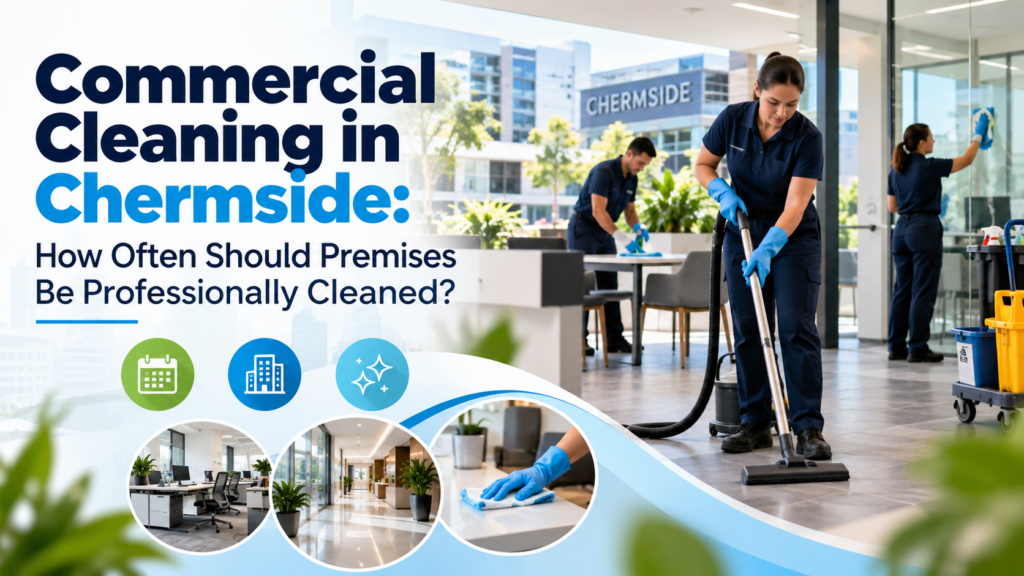
The frequency of commercial cleaning in Chermside businesses depends on foot traffic, operating hours, employee numbers, customer activity, washroom usage, and the type of property being maintained. Depending on the workplace, professional cleaning may be required daily, while smaller facilities may need service only a few times each week.
A professional commercial cleaning service in Chermside should account for daily maintenance, periodic deep cleaning, and the specific requirements of high-traffic areas such as entrances, reception areas, washrooms, kitchens, corridors, and shared workspaces.
No single cleaning schedule works for every business. The goal is to maintain a consistently clean environment without paying for unnecessary visits or allowing dirt and residue to accumulate between services.
How Often Should You Perform Commercial Cleaning in Chermside?
Not all commercial properties require the same cleaning frequency. The ideal schedule depends on how quickly different areas become dirty and how important hygiene and presentation are to employees, customers, and visitors.
Daily cleaning may be appropriate for washrooms, kitchens, bins, entrances, and high-traffic floors in busy businesses. Other areas may require detailed cleaning two or three times each week.
An effective workplace cleaning schedule should combine different frequencies according to the purpose and usage of each area. For example, a busy reception area may need daily floor cleaning, while an infrequently used meeting room may require less attention.
Businesses can also refer to the ultimate guide to office cleaning in Brisbane to explore workplace cleaning considerations, hygiene practices, and maintenance strategies.
Recommended Commercial Cleaning Frequency by Business Type
Different commercial properties require different cleaning programs. The number of people entering a property and how the space is used often matter more than its total floor area.
Offices and Corporate Workplaces
Small professional offices may need cleaning only a few times each week, particularly when visitor traffic is low and employees maintain their individual workstations.
Larger workplaces with shared kitchens, multiple washrooms, meeting rooms, and many employees may require daily cleaning. Priority areas include entrances, reception desks, bins, floors, desks, and communal spaces.
Businesses looking for consistent workplace maintenance can explore professional office cleaning services in Brisbane. Cleaning schedules can be planned around staff numbers, workspace usage, and operating hours.
Retail and Customer-Facing Businesses
Retail premises often need frequent cleaning because presentation directly affects the customer experience.
Floors, entrances, counters, fitting rooms, glass surfaces, and customer washrooms may require daily cleaning. Additional attention may be necessary during busy trading periods, promotional events, or seasonal sales.
A structured cleaning schedule helps maintain a professional appearance while reducing dirt accumulation in customer-facing areas.
Gyms and Fitness Facilities
Gyms experience substantial foot traffic, shared equipment use, change-room activity, showers, and frequent floor contact.
Equipment contact points, washrooms, showers, floors, and changing areas may need attention every day, with additional cleaning during operating hours where usage is particularly high.
Periodic deep cleaning can also address flooring, grout, and other surfaces that routine maintenance may not fully restore.
Restaurants and Hospitality Premises
Restaurants and cafés generally have higher cleaning demands than standard office environments. Kitchens, dining areas, washrooms, floors, and customer-facing spaces require regular maintenance.
Grease, food debris, spills, and moisture can accumulate quickly, making an appropriate cleaning schedule particularly important.
The cleaning frequency should reflect kitchen activity, trading hours, customer volume, and the requirements of individual areas. Businesses should also ensure their cleaning procedures meet the applicable food safety and workplace requirements.
Warehouses and Industrial Properties
Warehouses do not always require the same presentation-focused cleaning as customer-facing businesses, but dust, debris, equipment movement, and loading activity create their own challenges.
Cleaning frequency should be based on floor conditions, workplace activity, employee facilities, entryways, and safety-sensitive areas. Busy industrial premises may require regular floor maintenance, while offices and staff kitchens within the same property may need separate schedules.
Daily, Weekly and Monthly Workplace Cleaning Schedule
An effective commercial cleaning program assigns each task an appropriate frequency rather than treating every area identically.
| Frequency | Typical cleaning tasks |
|---|---|
| Daily | Washrooms, bins, entrances, high-traffic floors, shared kitchens and frequently touched surfaces |
| Several times weekly | Work areas, shared spaces, meeting rooms and lower-traffic floors |
| Weekly | Detailed dusting, floor edges, internal glass and quieter areas |
| Monthly or periodic | Carpet cleaning, floor scrubbing, grout cleaning and deeper cleaning, depending on usage and condition |
This schedule is a general starting point, not a fixed rule. Busy premises may need more frequent service, while smaller offices may require fewer visits.
The right schedule should be reviewed periodically to ensure it continues to match actual workplace conditions.
What Determines Business Cleaning Frequency?
Several practical considerations influence how often a business needs professional cleaning.
Daily Foot Traffic
The more people who enter a property, the more dirt they carry onto floors and into common areas.
Busy entrances, reception areas, corridors, and customer spaces often require more frequent maintenance than rooms used occasionally.
Number of Employees and Visitors
A workplace with more employees will generally place greater demands on washrooms, kitchens, break rooms, and shared facilities.
Frequent client visits can also increase the need for cleaning in visible areas, especially reception spaces and meeting rooms.
Operating Hours
Extended working hours allow dirt, waste, spills, and other residue to accumulate.
Businesses operating early in the morning, late at night, or across multiple shifts may need cleaning before or after operating hours. Some premises may also benefit from additional visits during the working day.
Flooring and Carpet Type
Different surfaces, including hard floors, commercial carpets, rubber flooring, and tiles, have different maintenance requirements.
Regular vacuuming or mopping may be sufficient for routine upkeep, but professional treatment can be necessary when embedded dirt, staining, or surface residue becomes difficult to remove.
Which Areas Need Cleaning Most Often?
The most frequently used parts of a commercial property generally require the most consistent cleaning.
Entrances and Reception Areas
These areas create the first impression of a business and experience constant foot traffic. Outside dirt, dust, marks, and wet-weather debris can accumulate quickly around doorways.
Regular floor maintenance, surface cleaning, and waste removal help keep entrances presentable.
Commercial Washrooms
Washrooms can deteriorate faster than other areas because of frequent use and moisture.
High-traffic facilities may need daily cleaning, with periodic deep cleaning to address grout, floors, fixtures, partitions, and corners. Cleaning frequency should also account for the number of users and the availability of facilities.
For tiled commercial washrooms, professional commercial grout cleaning can help remove accumulated dirt and residue from grout joints that routine mopping may not adequately reach.
Staff Kitchens and Break Rooms
Shared kitchens can accumulate spills, crumbs, food residue, and waste throughout the working day.
Larger workplaces may require daily maintenance, while more thorough cleaning can address areas that routine wiping and mopping cannot adequately restore.
High-Traffic Floors
Walkways, corridors, reception areas, kitchens, and entry zones often require more frequent vacuuming or mopping than other parts of the property.
Look for visible stains, dullness, residue, and traffic patterns. When tiled floors remain discoloured after routine cleaning, professional tile and grout cleaning may help remove embedded dirt and improve their appearance.
Signs Your Chermside Business Needs More Frequent Cleaning
Several signs indicate that your existing cleaning schedule may no longer be adequate.
Consider reviewing your cleaning frequency if:
- Floors look dirty before the next scheduled visit.
- Bins fill up quickly or waste accumulates in shared areas.
- Washrooms become untidy shortly after cleaning.
- Kitchen surfaces collect visible residue throughout the day.
- Customer-facing areas frequently look unprofessional.
- Carpets develop visible traffic lanes or persistent stains.
- Staff repeatedly report cleaning problems.
These issues suggest that the current schedule may not match the actual usage of your premises.
If problems continue to appear between cleaning visits, review the tasks being completed, the areas receiving attention, and the frequency of service. Increasing the number of visits may help, but the cleaning method may also need to change.
When Is Routine Commercial Cleaning No Longer Enough?
More frequent cleaning visits do not solve every problem. If floors remain dull after mopping, carpets retain stains after vacuuming, grout stays dark, or residue continues to build up in high-traffic areas, specialist cleaning may be necessary.
Routine commercial cleaning focuses on maintaining day-to-day cleanliness. Specialist cleaning targets embedded dirt, persistent stains, flooring residue, and buildup that ordinary maintenance cannot fully remove.
For example, professional tile cleaning can help address dirt trapped in grout joints and improve the appearance of tiled surfaces. Businesses can learn more about the benefits of professional tile and grout cleaning when deciding whether their floors need additional treatment.
A practical cleaning plan combines regular maintenance with periodic specialist treatment, based on the property’s condition and usage.
When Should Chermside Businesses Schedule a Commercial Deep Clean?
A commercial deep clean is worth considering when carpets, floors, grout, kitchens, washrooms, or other surfaces show noticeable buildup.
Businesses may also arrange deep cleaning:
- After renovations or maintenance work.
- Before important client visits or inspections.
- After busy trading periods.
- When a property has gone too long without specialist cleaning.
- When persistent stains or residue remain despite routine maintenance.
The appropriate timing depends on the property, the type of surface, and how quickly dirt accumulates.
For a better understanding of workplace cleaning options, businesses can explore Pure Earth Cleaning’s commercial cleaning services, which cover different business environments and cleaning requirements.
How Commercial Maintenance Cleaning Prevents Bigger Problems
Regular commercial cleaning helps prevent everyday dirt from developing into more difficult cleaning problems.
Frequent carpet vacuuming removes loose dirt before it becomes deeply embedded. Regular floor maintenance helps manage surface residue, while consistent washroom cleaning prevents neglected areas from becoming increasingly difficult to maintain.
However, routine cleaning should not be treated as a replacement for specialist treatment where it is needed. Carpets, tiled floors, and grout may still require periodic professional cleaning depending on their condition and usage.
The objective is to maintain the workplace consistently while reducing the need for avoidable corrective cleaning.
Why Choose Pure Earth Cleaning for Commercial Cleaning in Chermside?
Pure Earth Cleaning provides cleaning services for businesses across Brisbane, including Chermside. Cleaning requirements can be tailored to property size, foot traffic, operating hours, and the areas that need the most attention.
Cleaning Plans Based on Actual Workplace Use
A suitable cleaning schedule should reflect how a business operates rather than follow the same routine for every property.
Cleaning priorities can be established around entrances, washrooms, kitchens, floors, shared spaces, and customer-facing areas.
Routine and Specialist Cleaning Support
Businesses can combine regular maintenance with specialist services when necessary. Depending on the property, this may include carpet cleaning, floor care, stain treatment, tile and grout cleaning, and deeper cleaning.
Flexible Scheduling for Busy Properties
Cleaning can be arranged around staff, customers, trading hours, and access requirements to help minimise disruption to business operations.
Support for High-Traffic Commercial Areas
Entrances, washrooms, kitchens, floors, shared workspaces, and customer-facing areas can receive priority based on their usage and cleaning requirements.
Pure Earth Cleaning also serves nearby commercial areas, including Northgate and Aspley. These pages provide additional information for businesses looking for location-specific commercial cleaning services.
To discuss your requirements, visit the Pure Earth Cleaning website and request a quote for your premises.
Conclusion
The right commercial cleaning frequency for Chermside businesses depends on how busy the premises are and which areas experience the most use. Washrooms, entrances, kitchens, and high-traffic floors may require daily cleaning, while less frequently used areas may not need the same level of attention.
A well-planned cleaning schedule should combine routine maintenance with periodic specialist services. When ordinary cleaning no longer removes embedded dirt, stains, or residue, professional treatment may be needed.
Pure Earth Cleaning offers commercial cleaning services across Brisbane, including support for workplace maintenance and specialist floor and grout cleaning.
If your existing cleaning schedule no longer matches your workplace’s needs, contact Pure Earth Cleaning through its website to discuss a cleaning plan based on your premises, traffic levels, and operating hours.
Frequently Asked Questions
1. How frequently should a busy commercial property in Chermside be cleaned?
Busy premises may require daily cleaning, particularly in washrooms, kitchens, entrances, and high-traffic areas. Lower-traffic spaces may need less frequent service.
2. Do offices in Chermside need daily cleaning?
Not always. Smaller offices with limited visitor traffic may require fewer visits each week, while larger workplaces with shared facilities may benefit from daily cleaning.
3. How frequently should commercial washrooms be cleaned?
High-traffic washrooms often need daily cleaning. The appropriate frequency depends on usage, the number of people accessing the facilities, and how quickly they become dirty.
4. How often should commercial carpets be professionally cleaned?
Frequency depends on foot traffic, staining, carpet condition, and presentation requirements. The cleaning schedule should reflect the condition of the carpet and the needs of the business.
5. When should a business increase its cleaning frequency?
Consider increasing cleaning frequency when floors, bins, washrooms, kitchens, or customer-facing areas become dirty before the next scheduled visit, or when staff regularly report cleaning issues.
6. Can routine commercial cleaning replace deep cleaning?
No. Routine cleaning maintains everyday cleanliness, while deep cleaning targets embedded dirt, stains, grout, flooring, carpets, and buildup that regular maintenance may not remove effectively.
7. How can businesses arrange commercial cleaning in Chermside?
Businesses can visit the Chermside commercial cleaning service page to review the service and discuss their cleaning requirements.