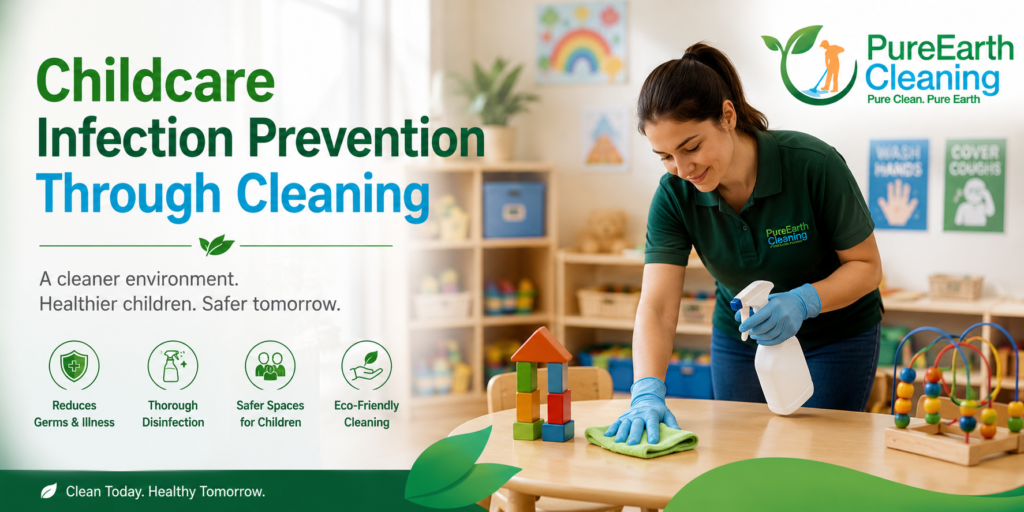
One of the best methods of eliminating the spread of germs, bacteria or viruses in childcare centres is through professional child care infection control cleaning. The childcare environment possesses a higher tendency of cross-contamination as the children tend to share toys, learning resources, playgrounds, wash-rooms and eating areas. The hygiene of high-contact surfaces, disinfection of common areas, hygiene of washrooms and deep cleaning of crucial points are the main pillars of the coordinated program of infection prevention cleaning to ensure a safer environment for children, teachers and visitors.
Children are likely to touch things and as a result hygiene is a key component of any childcare facility. Although day to day cleaning is helpful in keeping things in check, professional infection control cleaning takes it much further by aiming at the unseen contamination that can go unnoticed during routine cleaning. Not only will investing in clean practices help the wellbeing of children, but will also provide parents with more assurance in your childcare facility and its views on health and safety.
Why Infection Prevention Matters in Childcare Centres
Childcare centres continuously interacted with children, teachers, parents, and guests during the day. Germs have the ability to spread fast over the classrooms, play grounds and common facilities without well-organized infection prevention practices.
Keeping high cleaning standards can assist childcare centres:
- Minimise the transmission of diseases
- Provide learning conditions that are healthier
- Improve parent confidence
- Support educator wellbeing
- Have a cleaner facility
- Keep children safe in their daily activities
One of the best investments a childcare centre can have is a proactive infection control cleaning program.
What is Childcare Infection Control Cleaning?
Childcare infection control cleaning is a specialised cleaning methodology that aims to reduce the transmission of bacteria, viruses and other contaminants in childcare centres. In contrast to general cleaning, infection control is aimed at disinfection of areas of high contact, sanitisation of shared equipment and minimisation of the risk of contamination around the centre.
High-Touch Surface Sanitisation
Doors, tables, chairs, storage and light switches, as well as common learning materials all need to be sanitised regularly due to constant use over the day.
Classroom Cleaning
The learning environment must be kept tidy so as to minimise contamination and ensure the environment is safe and well-organised to allow children to learn.
Washroom Disinfection
Wash rooms of children need extensive cleaning with detailed equipment to minimize bacteria and ensure high hygiene standards.
Shared Equipment Cleaning
Play equipment, educational materials, toys and play mats need to be cleaned regularly as they are often used by many children.
Key Areas That Require Daily Infection Control Cleaning
Certain spaces in childcare centres are in much more contact than others and do not need to be given the same attention in terms of cleaning.
Learning Tables and Activity Stations
Youngsters spend hours every day at common tables to study, craft and eat. Sanitisation is done frequently to minimize the spread of germs among children during the day.
Toys and Educational Equipment
Puzzles, books, sensory toys, and building blocks should be washed frequently, as they can be touched by different children, during their everyday activities.
Indoor Play Areas
The play equipment installed indoors are constantly in use and need to be sanitised to reduce much contamination whilst ensuring a safe play environment.
Washrooms and Handwashing Stations
Washrooms are also on the list of most urgent locations concerning infection prevention and should be organized so that they are cleaned during working hours.
Reception Areas
The counters, seating, and touchpoints are often frequented by parents, visitors, and the staff in the reception areas, and thus regular disinfection is necessary in these settings.
Daily Cleaning Practices That Help Prevent Infection
Cleaning on a daily basis contributes significantly to avoiding contamination spread all over the childcare centre.
Disinfect High-Touch Surfaces Multiple Times Daily
Hand contact surfaces ought to be disinfected a number of times throughout the day to reduce the spread of germs among the children, teachers and visitors.
Clean Spills Immediately
The spillage of food, beverages, and body fluids need to be washed within a short time using the right infection control measures.
Empty Waste Bins Regularly
The waste dumping sites must be frequently emptied and washed to minimize the contamination and have a cleaner indoor environment.
Maintain Clean Floors
During the day, floors accumulate dirt, dust, moisture, and germs, which require cleaning with a mop, vacuuming and sweeping.
Encourage Proper Hygiene Practices
Professional cleaning and supporting handwashing routines are more effective as an infection prevention plan.
Common Cleaning Mistakes That Increase Infection Risks
Centres that are cleaned on daily schedules can inadvertently leave hygiene gaps in case significant areas are neglected.
Cleaning Only Visible Surfaces
A lot of contaminants are left on high-contact surfaces that look clean, which is why it is crucial to disinfect them properly instead of basing on the surface appearance.
Inconsistent Toy Cleaning
There should be an organised cleaning regime of shared toys rather than cleaning them only when they look dirty.
Delaying Deep Cleaning
Scheduled deep cleaning cannot be substituted by routine cleaning because at least it eliminates nocturnal dirt, bacteria and contaminants.
Ignoring High-Traffic Areas
Entrances, areas, common playgrounds and reception rooms need a higher frequency of cleaning due to the constant use.
Benefits of Professional Childcare Infection Control Cleaning
Professional childcare cleaning of infection control offers greater hygiene than simple maintenance and aids centres to keep the environments clean at all times.
Reduces Germ Spread
Professional cleaning focuses on the contamination in the whole facility with a systematic cleaning process.
Creates Healthier Learning Environments
Children enjoy cleaner classrooms, safer plays and hygienic shared facilities that aid in normal learning.
Builds Parent Confidence
When parents see in centres that hygiene and infection prevention are taken seriously, they are more at ease entrusting their children to such care.
Supports Educator Wellbeing
Healthier workplaces accommodate better working environments in the workplace besides making daily operations more efficient.
Improves Overall Centre Presentation
Properly maintained facilities create good impressions towards current and potential enrolments.
Signs Your Childcare Centre Needs Professional Infection Control Cleaning
The demand on cleaning usually rises slowly and thus it is vital to identify the signs of degradation of hygienic standards at an early stage.
Frequent Illness Among Children
Recurring instances of common diseases can be an indication that cleaning processes require reinforcement.
Persistent Odours
Bad odors are usually indicators of some dirty secret contamination that has not been taken care of during regular cleaning.
Dirty High-Touch Surfaces
Tables, toys, chairs, door handles, etc that seem unclean on a regular basis may be in need of professional help.
Stained Floors and Grout
Unclean flooring will impact on hygiene and the general outlook of the childcare centre.
Increasing Parent Concerns
Comments or complaints about tidiness should never be seen as a chance of failing to enhance hygiene.
Pure Earth Cleaning: Professional Childcare Infection Control Cleaning
Pure Earth Cleaning is a reputable childcare infection control cleaning business that assists childcare centres, early learning centres, kindergartens and educational centres to have cleaner, healthier and safer learning environments. Our professional commercial cleaners are aware of the need to prevent infection, and they provide customized cleaning initiatives to help in boosting child welfare, teacher safety, and parent-trust on a daily basis.
12+ Years of Commercial Cleaning Experience
Our cleaning experts are well aware of the special hygiene needs of childcare facilities and adhere to professional cleaning processes that are aimed at educational facilities.
6,500+ Commercial Cleaning Projects Successfully Delivered
We have assisted hundreds of commercial facilities to keep cleaner environments by reliable cleaning services depending on the industry and operations requirement.
300+ Businesses Trust Our Cleaning Expertise
Businesses in Brisbane trust Pure Earth Cleaning to provide regular service to Brisbane, to deliver quality cleaning services and to offer long term support in commercial cleaning.
100% Background-Verified Cleaning Professionals
Background checks and professional training are provided to every employee of our cleaning staff allowing childcare cleaning providers full confidence in the individuals serving in their premises.
Conclusion
Proper childcare infection control cleaning is critical because it improves the health of children, benefits educators and gives parents assurance of the cleanness of your childcare centre. The daily cleaning, frequent sanitisation, formalised infection prevention strategies and periodic deep cleaning combine to reduce contamination and provide healthier learning environments.
Childcare providers must also put in place proactive cleaning programs that uphold high standards in all areas of the facility instead of responding to hygiene issues once they arise. Childcare centres all over Brisbane can be cleaner, their playgrounds healthier and their environments safer with the professional assistance of Pure Earth Cleaning so that children can learn, play and grow confidently in their classrooms and playgrounds.
FAQs
1. What is childcare infection control cleaning?
Childcare infection control cleaning is a special cleaning exercise which aims at minimising the transmission of germs, bacteria and viruses by performing frequent sanitisation and disinfection of childcare facilities.
2. Why is it important to prevent infection in childcare centres?
Young children are likely to share toys, learning equipment and play areas leading to a necessity to be at the forefront of preventing infection to have healthy learning spaces.
3. What are the most important areas that have to be washed?
The highly touched surfaces, such as toys, classrooms, washrooms, eating areas, indoor play equipment and reception areas ought to be sanitised frequently during the day.
4. What is the frequency of professional cleaning of childcare centres?
The majority of childcare centres enjoy daily cleaning alongside regular deep cleaning of facilities at the hands of experts depending on the number of children and the activities going on.
5. Does infection control cleaning substitute for daily cleaning?
No. Infection control cleaning is an addition to daily cleaning offering deeper sanitisation and addressing unseen contamination that might not be addressed through routine cleaning.