
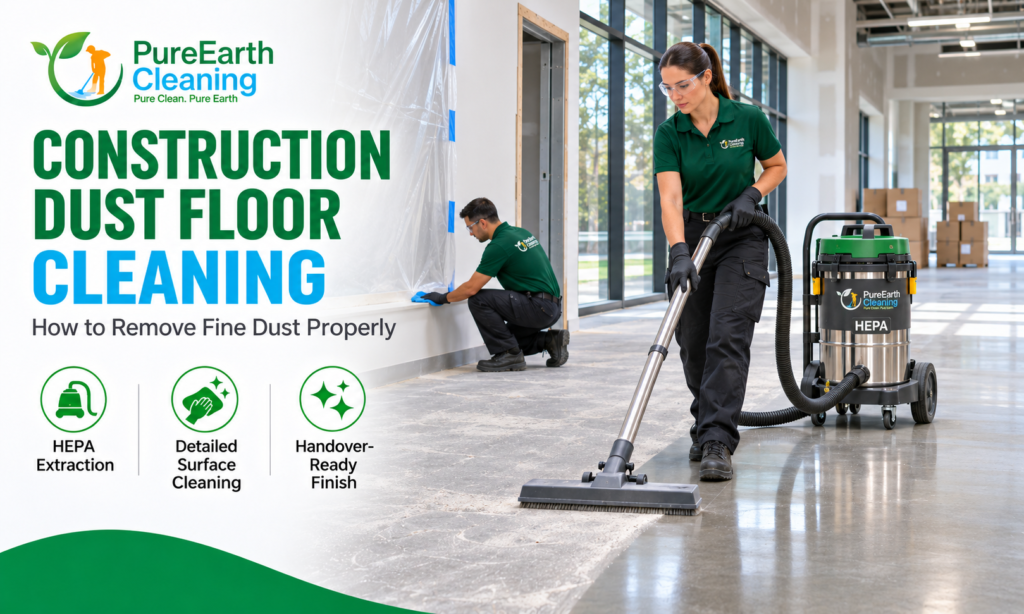
Construction dust floor cleaning matter after renovations, office fit-outs, building work, and commercial upgrades. Plaster, drywall, cement, grout, sanding, and cutting all throw off fine dust. It lands on floors, in corners, at entrances, and in nearby rooms. Grab a mop and you may just get streaks. Loose dust can turn to muddy residue, or you spread particles over surfaces you’ve already cleaned.
Good post-construction cleaning starts dry. Use the right equipment to pick up the dust, then apply a compatible cleaning solution. Brisbane businesses getting ready to reopen or move into renovated premises need the right process. It leaves floors cleaner and presentable without damaging the surface.
Why Construction Dust Is Difficult to Remove
Construction dust is made of fine particles. They keep settling long after the building work ends. Plaster powder, cement residue, sawdust, and grout debris each react differently to water and cleaning chemicals.
Weak builders’ dust removal moves particles around instead of collecting them. Dry sweeping stirs up the fine dust, and it settles again on floors and nearby surfaces.
The right method depends on the floor surface. Concrete, tiles, vinyl, and polished flooring may each need different techniques and products. Know the surface before you start. This helps you avoid scratches, discolouration, and leftover residue.
How to Remove Construction Dust From Commercial Floors
Good construction dust floor cleaning follows a clear order. Take the dry particles away first. Wet cleaning then goes easier, and you’re less likely to spread dust through the property.
1. Remove Loose Dust First
Start by picking up loose dust, plaster particles, and small debris with suitable commercial vacuum equipment. With fine construction dust, choose equipment built for fine particles. Ordinary sweeping isn’t as good.
Watch the corners, skirting boards, doorways, edges, and the gaps around fixtures you can reach. Dust collects there more than in the middle of the floor.
Don’t tip water straight onto a heavily dusty floor. Fine powder mixes with moisture and forms a stubborn film. That needs extra treatment.
2. Identify the Flooring Material
Before any wet cleaning, work out what the floor is. Is it concrete, ceramic tile, vinyl, stone, or another commercial surface?
Each material has its own cleaning rules. Abrasive particles can scratch delicate finishes. The wrong chemical can damage a coating or leave marks.
For proper post-construction floor dust removal, follow the flooring manufacturer’s advice. Try any unfamiliar cleaning product on a small hidden patch first.
3. Clean Corners and Floor Edges
Construction dust builds up where floors meet walls, around door frames, under reachable furniture, and near new fixtures. Clean these spots before you finish the main floor. If you don’t, leftover dust drifts back onto the clean surface.
A detailed approach counts most in offices, shops, reception areas, and commercial corridors. Visible dust in those places affects how the whole premises looks.
4. Use a Suitable Damp-Cleaning Method
When the loose dust is gone, clean the floor with a compatible solution and a suitable mop or commercial cleaning equipment.
Change the water or the cleaning pads often. Dirty equipment pushes dust around and leaves streaks. Don’t use too much moisture, mostly on floors with seams, joints, adhesives, or moisture-sensitive finishes. Let the surface dry the way the manufacturer says before you check the result.
5. Remove Stubborn Construction Residue
Some floors keep dried grout marks, adhesive, plaster spots, or other leftovers from the building work.
This Construction dust floor cleaning job means identifying the substance before choosing a treatment. A product that handles grout may be wrong for polished stone, vinyl, or coated flooring.
Don’t scrape hard or use strong chemicals without checking they’re compatible. Residue that won’t shift may need specialist equipment or a professional.
6. Inspect and Repeat Where Necessary
Once the floor dries, look at it in normal light. Check for leftover powder, streaks, footprints, dull patches, and residue along the edges.
Still see dust? Repeat the right cleaning stage. Don’t reach for stronger and stronger chemicals. Some particles may also fall again from walls, ceilings, vents, or nearby unfinished areas.
Clean overhead and surrounding surfaces before the final floor clean. That cuts down on redoing work.
Common Mistakes During Post-Construction Floor Cleaning
The wrong approach can turn an easy job into a hard one. Common mistakes include:
- Mopping before vacuuming: Moisture turns fine dust into residue that spreads over the floor.
- Using unsuitable chemicals: Strong or acidic products can damage some flooring materials.
- Ignoring corners: Dust left along the edges drifts back over the cleaned surface.
- Using dirty mop water: Dirty water moves particles around. It doesn’t remove them.
- Scrubbing too aggressively: Abrasive dust and the wrong tools can scratch delicate finishes.
- Cleaning before building work is finished: More dust can land after the floor has been cleaned.
Avoid these, and your builders’ dust removal goes faster, and the finish looks more even.
When Should Businesses Book Professional Floor Cleaning?
You may want a professional when construction dust covers a large commercial area, residue stays after routine cleaning, or the flooring needs specialist treatment.
Consider professional Construction dust floor cleaning when:
- Fine dust keeps coming back after cleaning.
- Large floor areas need commercial equipment.
- Grout, plaster, or adhesive residue remains.
- The flooring material needs a specialist cleaning method.
- The premises have to be ready for staff, customers, or tenants.
- Renovation work has hit several rooms or common areas.
Professional commercial floor cleaning Brisbane can deal with these problems. They use methods suited to the floor material and the condition of the premises.
On bigger post-renovation projects, deep commercial cleaning Brisbane can add extra attention to entrances, accessible fixtures, edges, and other areas the construction dust reached.
Why Choose Pure Earth Cleaning?
Pure Earth Cleaning supports Brisbane businesses that need commercial premises ready after renovations, fit-outs, and building work.
Commercial Floor Cleaning
Our commercial floor cleaning services in Brisbane can tackle construction dust, everyday dirt, and suitable floor residue. We work on the surface and its condition.
Builders Cleaning Support
Need builders cleaning Brisbane after construction or renovation? Pure Earth Cleaning can help. We focus on the affected floors and other areas we agree on.
Detailed Cleaning for Commercial Premises
When you need it, floor cleaning can be part of wider commercial cleaning tasks. That helps get offices, retail spaces, and other workplaces ready for use.
Cleaning Planned Around Your Property
Different floors and different construction residues need different approaches. We tailor the cleaning scope to your property, the affected surfaces, and the look you want.
Contact Pure Earth Cleaning to discuss your post-construction cleaning needs and request a quote for your Brisbane commercial property.
Conclusion
Good construction dust floor cleaning starts with removing loose particles before any wet cleaning. Then identify the floor, treat stubborn residue with care, and inspect once it dries. Skip those steps, and you can spread dust, leave streaks, or damage some finishes.
Businesses renovating offices, shops, and other commercial premises can make final prep easier with professional cleaning. Pure Earth Cleaning offers builders cleaning Brisbane, commercial floor cleaning, and deeper commercial cleaning. We tailor each job to the property and what it needs.
Is construction dust or stubborn residue stopping your premises from looking ready? Contact Pure Earth Cleaning for professional Construction dust floor cleaning and a quote built around your property.
FAQs
1. What is the best way to remove construction dust from commercial floors?
First, remove the loose dust with suitable vacuum equipment. Then use a compatible damp-cleaning method, and check the floor once it dries.
2. Should construction dust be mopped immediately?
No. Remove the loose dust first. Moisture turns fine particles into residue that’s harder to clean.
3. Can construction dust scratch commercial flooring?
Yes. Fine abrasive particles can scratch some finishes when they’re dragged across the surface. So remove dust carefully.
4. How do you remove dried grout or plaster residue?
Work out what the residue is and what the floor is made of. Then pick a compatible treatment. Stubborn deposits may need a professional.
5. When should a business book builders cleaning?
Book it after construction, renovations, or an office fit-out, when dust and debris must be removed before normal use starts.
6. Can commercial floor cleaning include post-renovation dust?
Yes. The service can be tailored to the floor material, amount of dust, residue, and condition of the premises.
7. Who provides commercial floor cleaning in Brisbane?
Pure Earth Cleaning offers commercial floor cleaning and builders cleaning for Brisbane businesses. Each service is tailored to the property and what it needs.