
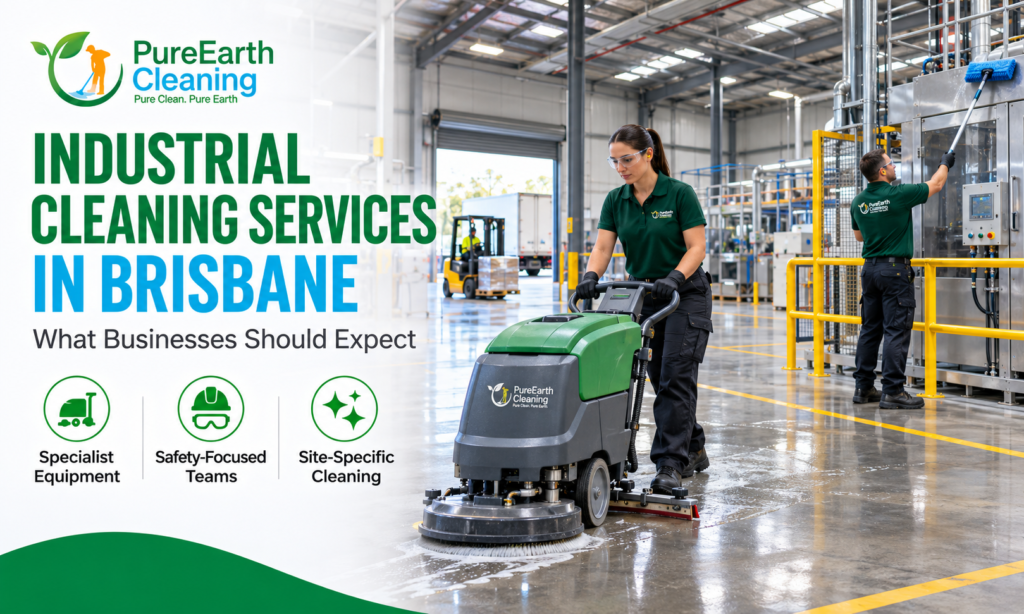
If you know what good industrial cleaning looks like, you’ll pick a better provider. You’ll also keep your site cleaner and your workplace hygiene on track. Warehouses, factories, workshops and distribution centres pile up dust, grease, packaging scraps and heavy foot traffic. A basic cleaning routine often can’t keep up.
Real professional cleaning goes well beyond emptying bins and wiping what you can see. Expect an agreed scope of work, the right equipment, trained staff, extra care for busy areas and a schedule that fits how you run. Picking industrial cleaning services Brisbane businesses can trust also means knowing what’s included. You should know how tasks are prioritised and how the provider communicates with your site managers.
Planning to hire a industrial cleaning contractor? These expectations make it easier to compare providers and build a cleaning plan that works.
What Is Included in Industrial Cleaning Services?
What you need depends on your property. Size, layout, daily activity and flooring all matter. A warehouse might need regular floor cleaning and dust removal. A manufacturing site may need more work around production areas, staff amenities and built-up residue.
Cleaning Floors and High-Traffic Areas
Industrial floors collect dust, dirt, tyre marks and bits of packaging. Your cleaning plan should name the right methods for walkways, loading areas, entrances and other floor surfaces people can reach.
The job might involve sweeping, commercial vacuuming, mopping or mechanical scrubbing, depending on the surface. Any commercial floor cleaning Brisbane job should use equipment and products suited to your flooring and site conditions.
Clear walkways and clean floors also make a site easier to look after. Still, the cleaners need to work around your site rules, foot traffic and vehicles.
Maintaining Staff Amenities and Shared Spaces
Bathrooms, kitchens, lunchrooms, change rooms and offices inside industrial sites all need regular care. Agree on the tasks up front. These could include wiping reachable surfaces, sanitising key touchpoints, emptying bins and restocking supplies if your contract covers it.
People use these rooms all day. They often need cleaning more often than storage areas or rooms that few people enter.
Managing Dust and Built-Up Grime
Dust settles on ledges, around equipment and along floor edges in most industrial sites. Your plan should name the priority areas. It should also say how the team will handle dust and everyday grime.
How that works depends on the site. Cleaners should only work near machinery, electrical installations or production equipment when someone has authorised it and your safety procedures allow it. Specialist industrial residues may need their own assessment. Routine cleaning won’t cover them.
What Should Businesses Expect From a Professional Cleaning Process?
When you’re sizing up what to expect from industrial cleaning services, look for a clear process. A vague promise to keep the place clean isn’t enough.
1. Initial Site Assessment
A good provider learns about your property before settling the scope. They may review your layout, floor types, access rules, operating hours, busy zones, and any cleaning concerns you have.
This tells everyone which tasks you need and how often. It also shows whether any area needs special equipment or a separate arrangement.
2. A Clear Scope of Work
Your agreement should say which areas get cleaned, which tasks the team will do and how often. Daily work might cover staff amenities and a few key walkways. Floor scrubbing or built-up grime in set areas might happen from time to time. When responsibilities are written down, there’s less room for confusion. You can also check whether the service delivers what you asked for.
3. Suitable Equipment and Cleaning Products
Industrial sites have large floors, stubborn dirt and many different surfaces. The team should choose equipment and products to match each task, surface, and your site conditions.
Machines may suit big open areas. Smaller rooms often need other tools. The team should follow the label on every product, including dilution, ventilation and handling.
4. Trained Staff and Site Safety
Industrial sites have moving vehicles, restricted zones, machinery, and hazards specific to the place. Cleaners need to know the procedures that apply to their work. They also need to know which areas they can enter.
Talk through access rules, inductions, personal protective equipment and how staff report hazards. The cleaning team should work with your facility managers so they don’t disrupt operations.
How to Evaluate the Quality of Industrial Cleaning
After a clean, you should know what the premises will look like. Don’t settle for general promises. Agree on practical checks and a way to talk about problems.
Useful quality checks include:
- Floors have no loose debris in the agreed areas.
- Reachable surfaces are cleaned as the scope says.
- Staff amenities and shared areas get their scheduled clean.
- Bins are emptied and waste is handled the way you agreed.
- The team uses products and equipment properly.
- Access problems, damage or odd residue go to your named contact.
- Missed tasks and complaints get a quick follow-up.
Ask how the provider reviews its own work. Depending on the contract, that could mean supervisor inspections, a checklist, scheduled reviews or one person you can call with concerns.
A clear process shows you repeat problems early. It also lets you change the schedule when conditions change.
What Should Businesses Check Before Hiring Industrial Cleaners?
Before you choose, hold each proposal up against your real site needs. The cheapest quote may skip tasks, visits or equipment that a busy industrial site needs.
Keep these points in mind while you compare providers:
- Scope: Does the quote list every area and task you need?
- Scheduling: Can the team clean around your shifts, deliveries and opening hours?
- Experience: Has the provider worked in warehouses, factories or similar sites?
- Safety: Will the team follow your site inductions and access rules?
- Equipment: Do they have the right gear for your floors and surfaces?
- Communication: How do you report a problem or ask for a change?
- Pricing: Does the quote spell out the work and what it leaves out?
- Consistency: How do they check finished tasks and deal with complaints?
If you’re comparing industrial cleaning Brisbane providers, ask these questions before you sign. You’ll avoid confusion later and set realistic expectations.
How Often Should an Industrial Facility Be Cleaned?
No single schedule fits every industrial property. Frequency depends on how busy the site is, what work happens there, how much dust it makes, how many people work there and how fast dirt builds up.
Busy walkways, amenities, lunchrooms and main entrances may need a clean every day. Warehouse floors and storage areas might follow a set schedule based on traffic and debris. Deeper floor treatments can happen from time to time, or when an inspection shows the need.
Review the schedule whenever production changes, you open a new work area or the season brings more dirt inside.
A good plan balances cleaning needs with what’s practical on site. Your provider should explain the frequency they suggest. They should also let you talk about priorities. Giving every area the same schedule rarely works.
Why Choose Pure Earth Cleaning?
Pure Earth Cleaning helps businesses keep their commercial spaces cleaner and more presentable. Each service is built around the property and what it needs.
For an industrial site, the first step is learning the facility. That means its busy areas and the cleaning jobs that matter most. A good plan can include agreed floor care, accessible surfaces, shared staff spaces, and any other areas the assessment identifies.
You can also ask about related commercial cleaning services Brisbane organisations often need for offices, amenities and shared workplace areas. If your scope calls for it, warehouse cleaning Brisbane and industrial floor cleaning services can fit into a bigger property maintenance plan.
Pure Earth Cleaning can help you sort out your cleaning priorities, find a schedule that works and set a scope that matches your premises.
Need steady cleaning support for your facility? Contact Pure Earth Cleaning to talk about your needs and request a tailored quote.
Conclusion
Knowing what to expect from industrial cleaning services helps you pick a provider with clear duties, the right methods, trained staff and good communication. Floor care, dust removal, staff amenities and scheduled inspections should all match how your site really runs.
Before you pick a contractor, check the scope of work, the safety arrangements, the cleaning frequency, the equipment and the quality checks. Those details make comparing providers easier and help you build a cleaning plan that lasts.
Pure Earth Cleaning supports Brisbane businesses with tailored commercial and industrial cleaning. Contact our team to talk about your site and arrange a quote for cleaning support that suits your workplace.