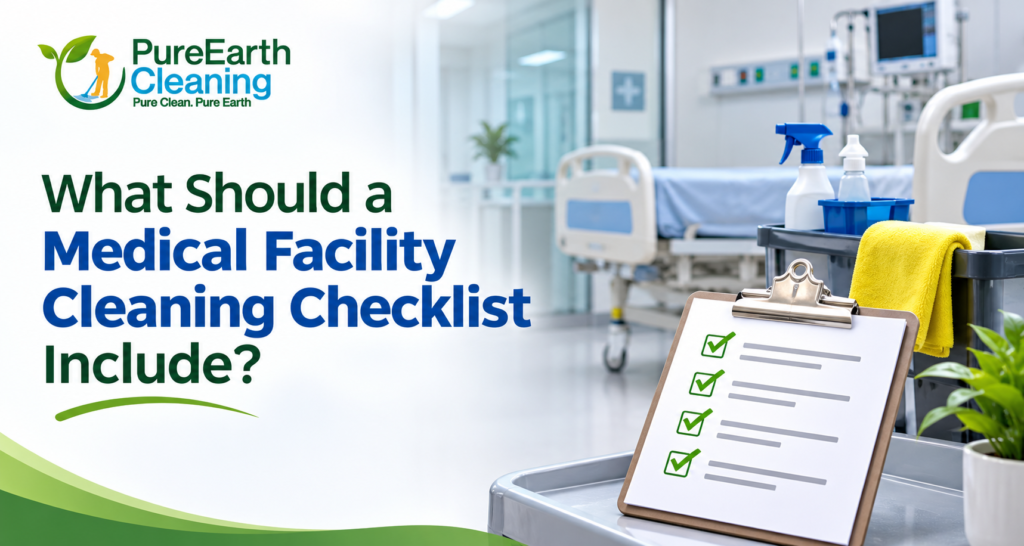
A medical facility cleaning checklist helps healthcare providers keep their premises clean, orderly, and hygienic. Patients, clinicians, and visitors all benefit. Every space needs its own cleaning routine. That includes reception desks, waiting rooms, consultation spaces, treatment areas and staff amenities.
A medical facility isn’t like an ordinary workplace. Cleaning priorities change with patient contact, surface use, contamination risks, and what happens in each area. A structured checklist shows cleaning teams the essential tasks. It keeps the work consistent and stops people from missing busy spaces.
You might manage a medical center, a GP clinic, a specialist practice, or an allied health facility. Either way, a clear cleaning schedule makes upkeep easier to organise and review.
Why is a Medical Facility Cleaning Checklist Important?
Patients, clinicians, and visitors move through a medical setting all day. Frequently touched surfaces, shared equipment and common areas need proper cleaning. Some also need disinfection when required.
A well-planned medical facility cleaning checklist sets out who does what. It also sets cleaning frequencies and procedures for each area.
It also helps facility managers:
- Organize daily, weekly, and periodic cleaning tasks.
- Spot the high-touch surfaces that need frequent attention.
- Keep waiting rooms and consultation spaces cleaner.
- Monitor completion of planned activities.
- Set consistent cleaning procedures for staff and contractors.
- Flag areas that need extra cleaning or specialist attention.
A checklist backs up routine cleaning. It doesn’t replace infection prevention policies, clinical protocols, or applicable healthcare requirements. Cleaning and disinfection procedures should follow the facility’s infection control plan and the product instructions.
What Should Be Included in a Medical Facility Cleaning Checklist?
An effective healthcare cleaning checklist covers the whole premises. Adjust tasks and frequencies to how much each area is used and how risky it is.
1. Reception and Waiting Areas
Reception and waiting rooms are some of the busiest spaces in a medical facility. Patients, visitors, and staff keep touching shared surfaces, seats, and entry points.
Your checklist should cover:
- Cleaning reception counters and the desk surfaces people can reach.
- Wiping door handles and switches that are touched often.
- Washing patients’ seats and armrests.
- Cleaning furniture and surfaces within reach.
- Vacuuming over a carpet or cleaning hard floors.
- Cleaning and changing bin liners.
- Cleaning glass entry doors and partitions within reach.
- Looking for visible spills and debris.
These tasks keep the space welcoming. They also cover surfaces people touch all day.
2. Consultation and Examination Rooms
Consultation rooms need careful attention. Patients and clinicians use them all day. Ensure a clear division of responsibility for cleaning tasks between general cleaning and clinical staff.
A clinic cleaning checklist should include:
- Cleaning reachable desks and non-clinical surfaces.
- Wiping door handles, switches, and other often-touched points.
- Cleaning chairs and examination-room furniture according to the facility’s protocol.
- Removing waste according to the applicable waste-handling procedure.
- Cleaning floors and skirting areas within reach.
- Looking for visible dirt, spills and debris.
- Checking the room is ready for its next scheduled use.
Authorized personnel must clean and disinfect clinical examination equipment, reusable medical devices, and patient-contact surfaces. They follow manufacturer instructions and the facility’s clinical procedures. General cleaners shouldn’t touch these items unless they’re trained and authorized.
3. Treatment and Procedure Rooms
Treatment and procedure rooms may involve higher-risk activities. They call for specific cleaning and disinfection procedures. The facility’s infection prevention team should set the medical centre cleaning tasks for these areas. Depending on the room and what happens there, the checklist may include:
- Cleaning and disinfecting designated environmental surfaces.
- Dealing with visible spills using approved procedures.
- Cleaning reachable furniture and non-clinical surfaces.
- Removing waste through the facility’s approved waste streams.
- Cleaning floors with the right products and equipment.
- Checking that cleaning records are filled in.
- Confirming that authorized staff have released the room for use.
Follow the facility’s own protocols for between-patient cleaning, terminal cleaning and blood or body-fluid spills. Don’t treat these jobs as ordinary general cleaning.
4. Bathrooms and Patient Amenities
Bathrooms need steady attention. Patients, visitors, and staff all use them. Make sure to include these tasks on your list:
- Disinfect and clean toilets and urinals.
- Clean wash basins, taps, and surrounding surfaces.
- Cleaning surfaces in easy-to-reach areas around the door handles and touchpoints.
- Washing the mirrors and dispensers.
- Using appropriate mop products to mop floors.
- Emptying bins.
- Restocking soap and paper products.
- Checking for leaks, smells, and visible dirt.
Schedule bathroom cleaning around usage. Add extra checks during busy periods.
5. Staff Rooms and Kitchen Areas
Staff kitchens, lunchrooms and break areas need regular cleaning too. They may not involve direct patient care. People still share them all day.
Your checklist should cover:
- Cleaning kitchen benches and tables.
- Wiping cupboard handles and the outside of appliances.
- Cleaning sinks and taps.
- Removing food waste and general rubbish.
- Washing floors and accessible surfaces.
- Monitoring fridges and communal equipment as per facility policy.
- Restocking agreed consumables.
Clean food preparation areas using products and procedures suited to those surfaces.
6. Floors, Corridors and High-Traffic Areas
Floors and corridors link the sections of a medical facility. Dirt, dust, and debris collect there throughout the day. Include the following:
- Vacuuming carpeted areas.
- Sweeping and mopping hard floors.
- Cleaning visible marks and spills quickly.
- Paying attention to corners and floor edges.
- Keeping skirting boards clean, when possible.
- Looking after entrance mats.
- Inspecting corridors for hazards and obstructions.
Choose a cleaning technique appropriate for the floor type and one that won’t create slip hazards. Plan with patient mobility and access requirements.
7. Frequently Touched Surfaces
Any healthcare facility cleaning program needs to single out high-touch surfaces. People touch them repeatedly. Common examples include:
- Door handles and push plates.
- Light switches.
- Reception counters.
- Handrails.
- Chair armrests.
- Tap handles.
- Shared non-clinical touchpoints.
- Controls and busy surfaces within reach.
Set cleaning and disinfection frequency based on the facility’s risk assessment and infection prevention procedures. Not every surface needs the same treatment or schedule.
Daily, Weekly and Monthly Medical Facility Cleaning Schedule
A practical medical facility cleaning checklist separates routine daily tasks from less frequent maintenance.
Daily Cleaning Tasks
- Clean and maintain reception and waiting areas.
- Clean toilets and replenish supplies.
- Deal with floors and visible debris.
- Wipe down agreed high-touch surfaces.
- Keep staff kitchens and communal areas in order.
- Perform specified cleaning of clinical areas as prescribed.
- Collect and dispose of waste appropriately.
- Note completed work and address any concerns.
Weekly Cleaning Tasks
- Clean skirting boards and edges within reach.
- Detail-clean suitable furniture and fixtures.
- Remove built-up dust from reachable surfaces.
- Clean glass partitions and internal doors.
- Check out less-used rooms.
- Revisit problems that persist.
Monthly or Periodic Tasks
- Arrange detailed cleaning of selected areas.
- Discuss cleaning requirements for the floors.
- Check hard-to-reach surfaces you can reach.
- Inspect cleaning history and recurring problems.
- Decide whether the cleaning schedule needs a change.
- Review cleaning products, equipment, and stock levels.
Treat these frequencies as starting points. They aren’t universal rules. Treatment rooms and other clinical spaces could require more frequent cleaning than other areas of the building.
Essential Supplies and Cleaning Equipment
The right products make it possible to consistently finish a healthcare cleaning checklist. Depending on the facility’s procedures, cleaning teams may need:
- Approved detergents and disinfectants.
- Color-coded cleaning cloths and equipment.
- Suitable mops and buckets.
- Commercial vacuum cleaners.
- Disposable gloves and any necessary protective equipment.
- Waste bags and containers for designated waste.
- Wet floor signs.
- Checklists and task-completion records.
Choose products for the surface and the job at hand. Use disinfectants as the label says. That covers contact time, dilution, and safety precautions. Maintain and store cleaning equipment properly so you avoid cross-contamination.
Common Medical Facility Cleaning Mistakes to Avoid
You can have a cleaning routine and still leave important tasks undone if procedures aren’t consistent. Avoid these common mistakes:
- Using the Same Cleaning Cloth Everywhere: You can carry contamination from one area to another.
- Ignoring High-Touch Surfaces: Cleaning hurriedly often means missing frequently touched surfaces.
- Mixing Cleaning Products: Mixing chemicals can cause reactions.
- Skipping Cleaning Records: Without documentation, managers will struggle to verify what was accomplished.
- Using Unsuitable Products: A product unsuitable for a surface may cause damage or fail to deliver the desired results.
- Ignoring Spill Procedures: Responses to blood and body fluid spillages must follow a specific, approved process.
- Treating Every Room Identically: Different clinical areas require different cleaning standards.
A clear checklist, proper training, and regular supervision help cut down these problems.
Why Choose Pure Earth Cleaning for Medical Facility Cleaning?
A medical office requires a cleaning strategy that acknowledges the daily needs of the office, its communal spaces, and its cleanliness.
Pure Earth Cleaning offers healthcare facility cleaning tailored to medical facilities. We cover reception areas, waiting rooms, staff amenities, floors, and agreed non-clinical surfaces. We can talk through a cleaning scope that suits your premises.
Our team can help businesses set cleaning schedules, find priority areas and build practical cleaning requirements around how they operate.
Clinics and healthcare businesses wanting healthcare cleaning Brisbane solutions can also tap into our broader commercial cleaning services Brisbane. We also cover offices, childcare centers, gyms, restaurants, and other commercial facilities.
Contact Pure Earth Cleaning to discuss your medical facility’s cleaning needs and request a tailored quote.
Conclusion
A detailed medical facility cleaning checklist helps healthcare providers organize cleaning duties and maintain consistent routines. It also highlights areas that need regular care. Waiting rooms, consultation spaces, bathrooms, staff kitchens and high-touch surfaces all need clearly defined tasks and sensible frequencies.
The best approach pairs a structured checklist with the right products and trained people. Add clear records and your facility’s infection prevention procedures.
Pure Earth Cleaning helps Brisbane businesses keep their commercial spaces cleaner and more professional with tailored medical and commercial cleaning. Get in touch to talk about your facility’s needs and set up a cleaning plan that works for your workplace.
FAQs
1. What should a medical facility cleaning checklist include?
It should cover reception areas, waiting rooms, consultation rooms, treatment areas, bathrooms, staff kitchens, floors and high-touch surfaces. It should also say who handles waste.
2. How often should a medical centre be cleaned?
General areas may need cleaning daily or more frequently, depending on use. Frequencies in clinical spaces must be determined by their activities, risk assessments and infection prevention practices.
3. What is the difference between cleaning and disinfecting in healthcare facilities?
Cleaning eliminates dirt and other organic material from surfaces. Disinfection uses appropriate products to destroy microorganisms. Disinfect after cleaning, if required by the product instructions and facility procedures.
4. Who is responsible for cleaning medical equipment?
Clinical staff or staff specifically trained and authorized should handle medical equipment. They adhere to the manufacturer’s directions and the facility’s clinical protocols.
5. What cleaning supplies are needed for a medical facility?
Approved detergents, disinfectants, color-coded equipment, appropriate mops, vacuum cleaners, protective equipment, and waste disposal materials.
6. Why are high-touch surfaces important in medical cleaning?
Patients, visitors and staff touch them again and again. A risk-based cleaning schedule helps keep shared environments cleaner.
7. Can commercial cleaners provide medical facility cleaning?
Yes. Commercial cleaning providers can do agreed environmental cleaning tasks. Their staff must be trained and authorized. They must also follow the facility’s infection prevention and safety procedures.