
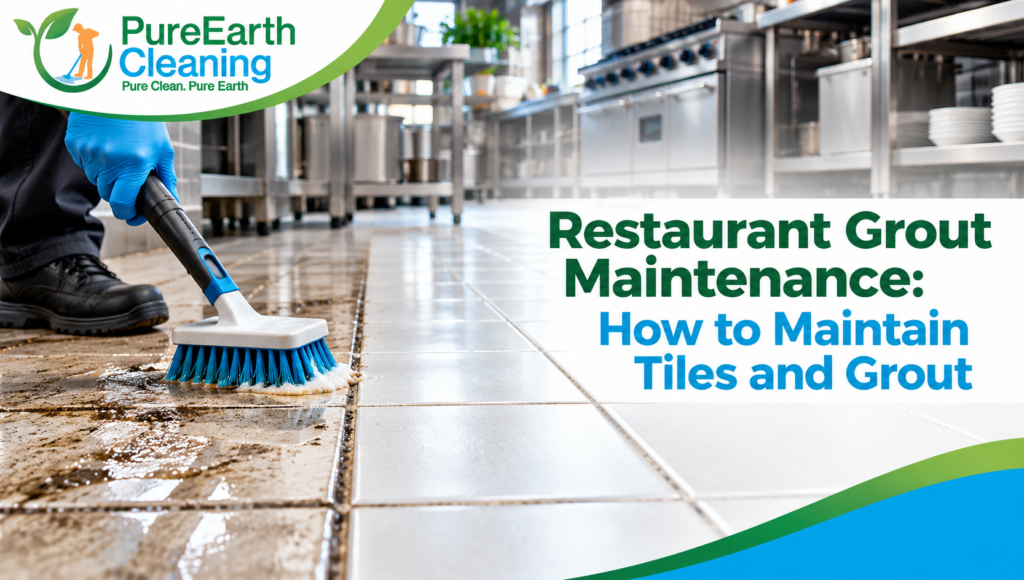
Restaurant grout maintenance should focus on managing grease, food debris, water, and dirt tracked in each day before they build up into dirty, dark grout lines that are difficult to clean. Tiled surfaces face different demands in busy restaurants, kitchens, prep areas, dining spaces, washrooms, and entry areas. Regular restaurant cleaning in Brisbane and professional tile and grout cleaning can help businesses maintain cleaner, more presentable floors.
Regular mopping helps, but it does not consistently remove embedded dirt and grease from grout lines. That is why an effective restaurant grout maintenance plan should include daily cleaning, quick spill cleanups, degreasing, inspections, and periodic professional cleaning. These tasks should complement broader commercial cleaning services rather than replace specialist floor treatments when they are needed.
In Brisbane restaurants, consistent maintenance between specialist cleans helps keep floors presentable and reduces the amount of intensive work required later. Combining routine restaurant cleaning services with professional floor care can help manage the buildup that ordinary mopping leaves behind. Restaurants can also request a free quote to discuss their cleaning requirements.
Why Restaurant Grout Gets Dirty So Quickly
Restaurant grout on ground-floor tiles is highly vulnerable to grease, moisture, food particles, drink spills, cleaning residues, and foot traffic. In high-traffic areas, particularly commercial kitchens, grout lines collect dirt more easily than the surrounding tile. Regular restaurant cleaning Brisbane services can help manage the different cleaning demands of these spaces.
Proper grout maintenance in restaurants is preventive, not reactive. The aim is to stop dirt and grease from accumulating to the point where floors become difficult to restore through routine cleaning alone. Consistent restaurant floor cleaning plays an important role in this process.
Grease and Food Residue
Commercial kitchens routinely produce grease, oils, crumbs, sauces, and food spills. These substances can work their way into grout lines, even when the surrounding tiles are mopped regularly.
Without appropriate cleaning, kitchen grout can accumulate residue over time and appear darker than the surrounding tiles. Thorough commercial kitchen cleaning helps manage grease and food residue before it becomes more difficult to remove.
Moisture and Cleaning Solutions
Excessive water or cleaning solution can also create problems. Dirty water can enter grout lines and leave residue when floors are repeatedly washed without proper rinsing or water changes.
This is especially common when staff mop floors in a hurry during busy service periods. Appropriate commercial floor care helps address stubborn residue while protecting the floor surface.
Heavy Foot Traffic
Restaurant floors are constantly exposed to staff, deliveries, customers, trolleys, and kitchen activity.
This can embed dirt into grout lines, especially at entrances, service counters, kitchen walkways, and dining areas. A planned schedule of restaurant cleaning services in Brisbane helps businesses manage these high-traffic zones more consistently.
How to Maintain Restaurant Tiles and Grout Between Professional Cleans
A good restaurant grout maintenance routine does not need to be complicated. The key is consistency and using suitable methods for the tiled surface. Where grime becomes difficult to remove, professional tile and grout cleaning may be required alongside everyday maintenance.
Sweep or Vacuum Before Mopping
Remove loose debris before introducing water. Food grains, dust, grit, and crumbs can turn into muddy residue when mixed with mop water, making restaurant floor grout cleaning less effective.
Brooms or suitable vacuum equipment should reach high-traffic restaurant areas and remove loose debris before wet cleaning begins. This makes routine commercial floor cleaning more effective and helps prevent dirt from being spread across the floor.
Use a Suitable Floor Cleaner
The cleaning product needs to be appropriate for the tile and grout type. Strong chemicals are not necessarily better. Overly aggressive products can damage certain surfaces or leave residue that attracts more dirt.
When cleaning restaurant tiles, follow the manufacturer’s instructions and use the recommended dilution. This is an important part of a consistent commercial cleaning approach that considers surface materials and cleaning requirements.
Change Mop Water Frequently
One of the simplest ways to spread grime on restaurant floors is by using dirty mop water.
Grey or greasy water can push residue into grout lines and undermine the entire cleaning process. Changing mop water regularly and using clean equipment are basic but essential parts of restaurant grout care.
Pay Extra Attention to Kitchen Areas
Kitchen grout generally gets dirty faster than dining-room grout. Cleaning kitchen grout is especially important for controlling cooking oils, food leftovers, splashes, and the effects of heavy staff traffic.
Pay particular attention to areas around cooking stations, sinks, dishwashing areas, preparation benches, and frequently used service passages. A professional restaurant cleaning team can help maintain these demanding areas according to their cleaning requirements.
Clean Spills Quickly
Remove spills promptly before they settle or spread. Sauces, oils, drinks, and food waste can leave sticky residues on tiles and grout. Fast spill response also reduces slip risks and helps maintain cleaner commercial kitchen floors.
For stubborn grease or residue that remains after routine cleaning, professional restaurant floor care may help restore the appearance of affected surfaces.
Daily, Weekly and Periodic Maintenance
The best results come from combining different cleaning frequencies. A structured maintenance schedule supports ongoing restaurant cleaning services and helps prevent dirt and grease from accumulating between specialist treatments.
Daily Tasks
Daily maintenance should focus on controlling visible dirt. Typical tasks include:
- Sweeping or vacuuming loose debris
- Mopping tiled floors
- Cleaning fresh spills
- Removing grease around high-use kitchen zones
- Checking grout near cooking and preparation areas
- Cleaning entrances and service paths
These tasks help prevent everyday buildup and support consistent restaurant hygiene.
Weekly Tasks
Weekly restaurant grout maintenance can be more detailed. A restaurant should check grout lines for darkening, stickiness, and staining, and assess whether routine mopping is producing satisfactory results.
Staff should also pay extra attention to edges, corners, areas beneath movable equipment, and spaces that are difficult to access during daily cleaning.
Where grout remains stained despite consistent maintenance, professional grout cleaning may be more effective than repeatedly using the same routine.
Periodic Tasks
When grout starts to look permanently dark or oily, regular maintenance may no longer be enough. This is when specialist tile and grout cleaning in Brisbane should be considered.
Professional cleaning can target embedded dirt and grease that ordinary mopping cannot adequately remove. The appropriate frequency depends on foot traffic, kitchen activity, flooring material, and the effectiveness of daily maintenance.
Signs Restaurant Grout Needs Professional Cleaning
Routine restaurant grout maintenance has its limits. Several warning signs suggest that deeper cleaning may be necessary.
Common signs include:
- Grout remains dark after mopping
- Grease buildup returns quickly
- Tiles look clean, but grout still appears dirty
- Sticky residue develops in kitchen areas
- Dining-room grout looks uneven or stained
- Washroom grout becomes discoloured
- High-traffic areas are visibly darker
- Cleaning takes longer, but results do not improve
When these issues appear, repeating the same cleaning routine may not solve them.
Professional commercial grout cleaning, restaurant floor cleaning, or deeper floor treatment may be more effective, depending on the type and condition of the surface.
Why Restaurant Floor Grout Needs Different Care
Restaurant flooring faces a complex mix of challenges: grease, food, water, heavy customer traffic, and frequent cleaning. Restaurants may also have tiled areas exposed to conditions that differ considerably from those in office environments.
Kitchen grout may need targeted degreasing, dining areas may require presentation-focused cleaning, and washrooms may need more attention to moisture and residue.
This is why restaurant grout maintenance should be tailored to each area rather than applying exactly the same cleaning procedure throughout the facility. Businesses operating several hospitality areas may also need to coordinate floor care with services such as hotel and pub cleaning.
When Should Restaurants Book Professional Tile and Grout Cleaning?
There is no universal schedule. The right frequency depends on traffic, kitchen activity, tile type, cleaning quality, and how quickly grout becomes visibly discoloured.
Restaurants should consider professional grout cleaning when:
- Routine mopping no longer improves grout
- Grease buildup becomes persistent
- High-traffic areas look noticeably darker
- Grout becomes heavily stained
- The restaurant is preparing for an inspection or refurbishment
- Dining areas no longer look consistently presentable
For businesses already using restaurant cleaning Brisbane services, tile and grout care can be included in a broader commercial cleaning plan where the provider offers the required service.
Why Choose Pure Earth Cleaning for Restaurant Tile and Grout Cleaning?
Pure Earth Cleaning provides professional cleaning support for Brisbane businesses that need more than routine mopping.
Tile and Grout Cleaning
Our tile and grout cleaning services in Brisbane target discoloured grout, grease buildup, high-traffic restaurant flooring, and areas that routine cleaning can no longer improve.
Commercial Grout Cleaning
Pure Earth Cleaning also provides commercial floor care for kitchens, dining areas, washrooms, entrances, and other tiled commercial spaces.
Restaurant Cleaning Support
Restaurants can combine specialist grout treatment with broader restaurant cleaning services, including routine cleaning, floor care, deep cleaning, and other suitable commercial cleaning support.
High-Traffic Floor Care
Busy restaurant floors need more than a standard once-over. Cleaning can focus on service pathways, kitchen areas, entrances, customer-facing spaces, and other zones where buildup develops fastest.
One Cleaning Partner
Pure Earth Cleaning can support multiple commercial cleaning needs through one provider, helping businesses reduce the need to coordinate separate contractors.
Contact Pure Earth Cleaning to discuss restaurant tile, grout, floor, and deep-cleaning requirements across Brisbane.
Conclusion
The key to maintaining grout in a restaurant is regular day-to-day cleaning, timely spill cleanup, clean mop water, suitable cleaning products, and special attention to kitchen and high-traffic areas.
Regular cleaning can slow the accumulation of grease and dirt, but some grout problems cannot be resolved through routine maintenance alone. When grout remains dark, sticky, or stained despite frequent cleaning, professional treatment is often the better option.
Pure Earth Cleaning offers commercial floor care, restaurant cleaning in Brisbane, and tile and grout cleaning services for businesses that need help maintaining presentable floors. When your restaurant floors still look dirty despite mopping, request a free quote to discuss a cleaning schedule suited to your premises.