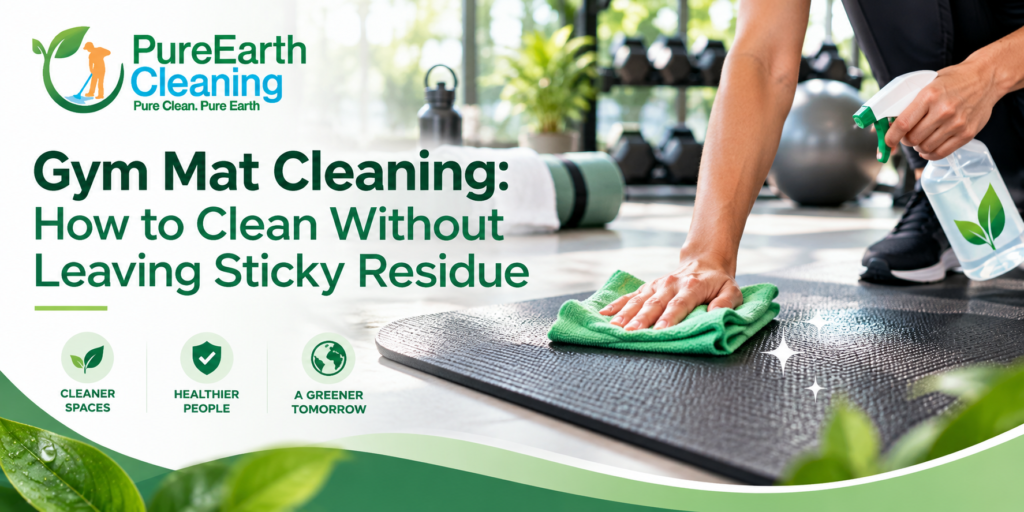
Gym mat cleaning should not leave the surface sticky, slippery, or stained by cleaning residues. The safest method is to remove loose debris, apply a cleaner appropriate for the mat material, use only the recommended cleaner, wipe away excess solution, and dry the mat before reuse.
In gyms and fitness centers, dozens of members can use mats daily. Improper cleaning techniques can leave cleaning chemicals behind, which attract even more dirt. A steady cleaning routine is just as important as the cleaning product.
Why Do Gym Mats Become Sticky After Cleaning?
The Gym mat cleaning process, not necessarily dirt, can often cause sticky mats. Excessive detergent, improper dilution, the wrong chemicals, or improper rinsing can leave a thin layer of product on the surface.
Gym mat cleaning should remove contamination without creating a new issue. It also varies on the specific way of doing it, depending on whether the facility has rubber, foam, yoga, exercise, or large interlocking floor mats.
Too Much Cleaning Product
Using more chemicals does not necessarily produce a better result. Excess cleaner can remain on the mat after wiping and create a tacky film. Always dilute according to the manufacturer’s directions, rather than making an overly concentrated solution.
The Wrong Cleaner for the Mat Material
A product suitable for one surface may not suit another. Before deciding how to clean gym mats, check the manufacturer’s care instructions, particularly for rubber, foam, coated, or textured materials. Strong chemicals may affect the surface, color, texture, or durability of certain mats.
Cleaner Is Not Being Removed Properly
An appropriate cleaning product may still leave residue if you use too much or leave excess solution on the surface.
Use a clean cloth or mop to wipe up leftover solution instead of smearing it over the mat.
How to Clean Gym Mats Properly
A reliable process helps fitness facilities keep mats cleaner without repeatedly dealing with sticky surfaces.
1. Remove Loose Dirt Before Wet Cleaning
Begin by clearing off hair, dust, chalk, grit, and any other loose material. Smaller floor mats could typically be cleaned by simply vacuuming or wiping, and larger floor mats might require intensive vacuum cleaning around the seams, edges, equipment, and corners.
Missing on this step is one of the reasons that can result in traces of loose dirt combining with cleaning reagent, causing streaks or muddy deposits.
2. Check the Mat Manufacturer’s Instructions
Some mats have cleaning limitations, so before rolling out a new product, find out what it’s made of and whether the manufacturer has any restrictions.
Professional exercise mat cleaning should always consider the material. Foam coated in rubber, vinyl, or EVA foam, and more, may need a different cleaning method.
3. Use the Correct Dilution
One of the simplest ways to make sticky mats is by using over-concentrated detergent. In commercial facilities, staff should follow a standard dilution process instead of estimating chemical quantities each time.
The wider fitness mat maintenance program is easier to standardize with the correct dilution process.
4. Apply Controlled Moisture
It should be damp-cleaned and not flooded. Use a sufficient amount of solution to clean the surface and wipe it dry using a clean microfibre cloth or a mop or any other appropriate tool that fits the mat.
Busier gyms may be better served by professional cleaning gear, as long as it works with the flooring or mat used.
5. Remove Remaining Residue
This is especially relevant in correcting the gym mat cleaning stickiness issues.
The surface may still feel tacky after cleaning; this could be because some product remains on the mat. When needed, use a clean, damp cloth or mop to remove any residual cleaning solution.
Do not keep adding more detergent to overcome stickiness caused by detergent buildup.
6. Allow Mats to Dry Fully
After each use, mats should be dried before members use them again.
Proper air circulation and drying time will minimize the chance of members stepping on wet surfaces and help staff identify residual sticky surfaces.
How Often Should Gym Mats Be Cleaned?
Cleaning frequency will vary based on the number of members, classes, mat use, facility size, and the nature of the activity.
High-traffic gyms may need to wash mats multiple times during the day, while personally allocated or low-use mats may follow a different schedule.
After Heavy Use
Stretching mats, class mats, and high-intensity session mats may need attention after high-frequency member turnover.
Facilities should use an effective cleaning procedure that can be completed without leaving the mats too wet.
Daily Cleaning
A detailed daily gym cleaning schedule can remove stagnant sweat, dirt, dust, and residue before they settle.
Also spot-clean scratchy mats, stubborn spots, and areas where cleaning solutions seem to form a film during daily inspections.
Periodic Deep Cleaning
Over time, regular wiping may not be enough. Intermittent, more vigorous cleaning can focus on textured areas, edges, seams, stubborn spots, and the surrounding flooring. This can be included in larger deep-cleaning Brisbane services for fitness facilities.
Common Gym Mat Cleaning Mistakes to Avoid
Even frequent cleaning can produce poor results if you use the wrong method.
Spraying Too Much Cleaner
Oversaturating mats wastes product and increases the risk of residue.
Use only enough solution to clean the surface effectively.
Mixing Different Cleaning Chemicals
Avoid mixing cleaning products unless the manufacturer specifically instructs you to. Combining products can damage surfaces and may create unnecessary safety risks.
Using Dirty Cloths or Mops
A dirty cloth can redistribute grime and detergent across multiple mats.
Cleaning tools should themselves be cleaned and replaced regularly as part of fitness mat maintenance.
Ignoring Areas Under and Around Mats
Cleaning only the visible upper surface can leave dirt accumulating underneath movable mats or around their edges.
Professional gym cleaning services Brisbane should consider the surrounding floor as well as the mat itself.
What About Large Rubber Gym Mats and Flooring?
Large rubber mats that surround a free weight or other functional training zone, or exercise equipment, tend to act more like a commercial floor than portable exercise mats.
These sections might need vacuuming, controlled wet cleaning, detailing of edges and intermittent in-depth floor treatment.
A commercial cleaning company in Brisbane that is a professional in cleaning a gym will be able to determine whether mopping every day will adequately clean or they will have to engage in more effective cleaning to remove dirt or cleaning-product build-up.
Gym mat cleaning can also be combined with a broader range of gym cleaning Brisbane services, including floors and equipment areas, reception and washrooms, change rooms, and other high-traffic areas.
When Does a Gym Need Professional Cleaning?
Professional Gym mat cleaning may be necessary when mats are sticky even after proper routine cleaning, when large areas of rubber have heavy residue, or when the facility has a variety of surface types that require different maintenance.
A professional commercial cleaning service in Brisbane can also handle mat cleaning and carpet sealing, hard-floor cleaning, grout washing, washrooms, and periodic deep cleaning.
This is especially useful for larger fitness centers, where staff spend a lot of time trying to fix similar cleaning issues.
Why Choose Pure Earth Cleaning for Gym Cleaning in Brisbane?
Pure Earth Cleaning provides professional cleaning support for Brisbane gyms, fitness centers, studios, and other high-traffic commercial facilities.
Cleaning Built Around Your Facility
Every gym has different flooring, mats, equipment layouts, member numbers, and operating hours. Pure Earth Cleaning can tailor the cleaning scope around the actual facility rather than relying on a generic checklist.
Routine and Deep Cleaning Support
Alongside regular gym cleaning Brisbane, Pure Earth Cleaning can provide deeper cleaning when high-use surfaces, mats, floors, grout, or other areas need additional attention.
One Provider for Multiple Cleaning Needs
Gyms may need more than daily surface cleaning. Pure Earth Cleaning can support carpet cleaning, floor care, stain treatment, tile and grout cleaning, and broader commercial cleaning requirements.
Professional Cleaning for High-Traffic Fitness Facilities
From exercise areas and change rooms to reception spaces and shared flooring, Pure Earth Cleaning can build a service plan around the areas used most.
If sticky mats, dirty floors, or inconsistent cleaning are becoming difficult to manage, contact Pure Earth Cleaning for a tailored gym cleaning quote in Brisbane.
Conclusion
Gym mat cleaning isn’t about using the most powerful product. It’s about matching the cleaner to the mat material, proper dilution, moisture control, removing excess solution, and proper surface drying.
Repeat stickiness is usually caused by excess cleaning product or residue that wasn’t effectively removed.
Pure Earth Cleaning offers professional gym cleaning services for Brisbane facilities, including floor cleaning, deep cleaning, carpet maintenance, tile and grout cleaning, and more.
To plan a cleaning arrangement around your gym’s mats, flooring, traffic, and operating schedule, call Pure Earth Cleaning today.
FAQs
1. Why are my gym mats sticky after cleaning?
Sticky mats are often caused by excess detergent, incorrect chemical dilution, unsuitable cleaning products, or residue left on the surface after cleaning.
2. What is the best way to clean gym mats?
Remove loose dirt first, use a product suitable for the mat material, follow dilution instructions, wipe thoroughly, remove excess residue, and allow the mat to dry.
3. Can gym mats be cleaned every day?
Yes, many high-use shared mats benefit from daily cleaning. The frequency should depend on member traffic, class turnover, mat type, and facility requirements.
4. Should gym mats be rinsed after cleaning?
This depends on the product and mat manufacturer’s instructions. If cleaner residue remains, an appropriate clean, damp wipe may help remove excess product.
5. Can strong disinfectants damage gym mats?
Some strong chemicals may affect certain mat materials. Always check compatibility and follow both the cleaning-product instructions and the mat manufacturer’s care recommendations.