Gym turf cleaning requires more than simply vacuuming visible dirt from the surface. Fitness centres have indoor artificial turf that gathers dust, hair, chalk, rubber particles, sweat, drink spills, and shoe debris, and also has to contend with sled pushes, functional training, weights, and all-time foot traffic.
Unlike outdoor synthetic grass, indoor gym turf is enclosed by equipment and usually laid directly over the building’s flooring. Cleaning must remove debris and residue without damaging turf fibres, backing, adhesive, or adjoining surfaces.
An effective cleaning schedule combines regular dry debris pick-up, timely spillage cleaning, regular thorough cleaning, and professional care when routine maintenance fails to deliver the desired outcome.
Why Indoor Gym Turf Needs Regular Cleaning
Artificial turf is widely used in gyms, as it provides a stable training surface for sledge work, functional fitness, stretching, agility, and strength training. But the same textured surface that makes turf helpful can entrap debris more deeply between the fibres.
Regularly cleaning indoor gym turf helps prevent this buildup from becoming harder to clean.
Gym turf is also prone to concentrated wear from members repeatedly using the same lanes. Sledge tracks, entrances, equipment areas, and transition areas between turf and hard flooring can thus get dirty quicker than other areas.
When it comes to Gym turf cleaning, place more emphasis on these high-traffic areas rather than assuming the entire turf needs the same level of cleaning.
Cleaning also helps in the overall appearance of the fitness facility. An otherwise well-maintained gym can look untidy because of a turf lane, hair, chalk, drink stains, or loose debris.
Top Ways for Gym turf cleaning
Gym turf cleaning starts with identifying the turf material and following the manufacturer’s maintenance guidelines. Not all surfaces should be treated the same way, as different installations may require different fibre, backing, adhesive, and cleaning products.
Remove Loose Debris First
Before adding moisture, always remove dry debris.
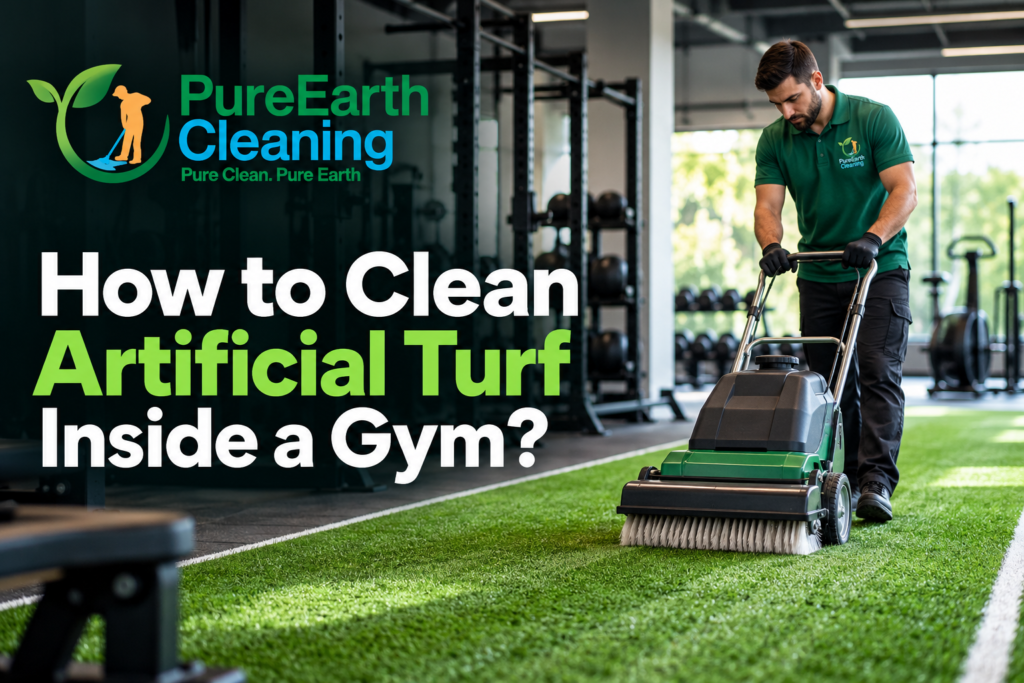
Vacuum the turf using equipment suitable for synthetic surfaces, paying particular attention to corners, edges, equipment bases, and heavily used training lanes. Dirt can be tracked in; hair, lint, rubber bits, chalk, and dirt can get under the surface.
To clean the turf effectively, clean it slowly so the equipment can pick up debris between the fibres rather than just drift over the top.
Collect rubbish larger than a coin before vacuuming to avoid blocking or damaging cleaning equipment.
Clean High-Traffic Lanes More Often
Gym turf does not get evenly dirty. Sledge tracks, entrances, transition areas, and areas surrounding racks or functional training equipment tend to be more utilised than the turf. Clean and check these zones more often.
A busy commercial gym may need to vacuum high-use turf daily, while less active areas may follow a different schedule.
This controlled methodology makes artificial turf gym maintenance more effective by concentrating cleaning resources on the areas degrading the most.
Treat Spills Quickly
Water bottles, sports drinks, coffee, supplements, and other liquids may spill onto the gym turf.
Allowing them to dry can leave sticky residue that attracts more dust and dirt. In the case of a spill, clean up as much of the liquid as possible as soon as possible with a suitable absorbent cloth or extraction technique.
Use a cleaning solution that aligns with the turf manufacturer’s recommendations.
Do not over-wet the surface. Water can extend the drying process and it can get to the backing or adhesive, depending on the installation of the turf.
Avoid Harsh Chemicals
Stronger chemicals do not guarantee cleaner artificial turf. Aggressive products can influence fibres, colouring, backing material, adhesives, or surrounding commercial flooring. Before introducing products into a standard gym turf cleaning program, always check for compatibility.
When you need a cleaning solution, follow the manufacturer’s dilution instructions carefully. Using too much detergent may leave residue in the turf and cause dirt to accumulate after cleaning.
Brush the Turf When Appropriate
Foot traffic and repeated use of sleds may flatten turf fibre with time.
When the turf manufacturer allows it, appropriate brushing can loosen compressed debris and improve the appearance of compressed areas.
The brush must not be too aggressive. The aim is to maintain cleanliness and lift fibres, not to damage or drag the surface.
For larger fitness centres, a professional gym floor cleaning company in Brisbane can assess whether brushing or specialised equipment is best for cleaning the installed turf.
Pay Attention to Edges
Turf lanes have edges that are easy to miss during routine maintenance. Artificial turf intersections with rubber flooring, tiles, concrete, or equipment tend to collect dust, hair, chalk, and other debris.
The cleaning of indoor gym turf should thus be detailed to cover edges, corners, transition strips, and accessible areas around the surrounding equipment.
These areas may require manual cleaning because standard vacuum cleaners cannot always reach them.
Allow Turf to Dry Properly
After applying moisture, leave the turf to dry before resuming heavy training. Proper ventilation may help, though drying time depends on the amount of moisture applied, turf build-up, room environment, and installation procedure.
Keeping members off wet areas will also minimise the chances of further spreading more dirt to freshly cleaned turf.
How Often Should Gym Turf Be Cleaned?
The right Gym turf cleaning schedule depends on member traffic, opening hours, turf size, training sessions, and how much dirt the surface picks up.
An effective synthetic gym turf care plan may involve:
- Daily: Clean up visible rubbish and vacuum high-traffic sled lanes, entrances, and functional training areas.
- Multiple times a week: Vacuum the entire turf area and check the edges, corners, and transition areas.
- As soon as there is a spill: Clean up the spill or residue before it dries and attracts more dirt.
- Weekly: Profile edges, check flattened areas, and look for recurring marks or residue.
- Monthly: Check high-traffic areas and determine whether regular cleaning is still delivering the needed outcome.
- Periodically: Have professional cleaning done when embedded dirt, widespread residue, or visible traffic patterns cannot be removed with regular cleaning.
The busiest gyms may need more frequent cleaning of the fitness turf, especially when the turf is subjected to constant sledge work or is in a high-traffic area.
Signs Your Gym Turf Needs Professional Cleaning
Artificial turf can be maintained to appear presentable over extended periods through regular maintenance, but it cannot address all build-up issues.
Consider professional cleaning when:
- Vacuuming no longer improves the turf: Dirt remains visible between fibres despite regular maintenance.
- Training lanes appear darker: Frequent sled and foot traffic leave a clear distinction between high and low use areas.
- Residue keeps coming back: Sticky residue from sports drinks, cleaning chemicals, or other spills may have settled lower in the surface.
- Edges are not clean: Rubbish still accumulates where the turf meets other floor coverings or equipment.
- The grass appears flattened and worn: High-traffic areas may need more targeted care.
- Unpleasant odours remain: Routine surface cleaning is not resolving the issue.
The adjacent gym is undergoing a deep clean: Turf can be added to floors, equipment areas, change rooms, carpets, and other high-use areas.
A professional fitness centre cleaning service in Brisbane can assess the turf and the facility as a whole, not just one surface.
Pure Earth Cleaning can also organise turf care alongside commercial floor cleaning in Brisbane, helping gyms keep rubber flooring, hard floors, carpeted areas, and artificial turf clean with a more comprehensive cleaning strategy.
When regular vacuuming isn’t enough, professional gym turf cleaning can provide a thorough reset, followed by regular maintenance.
Conclusion
Effective gym turf cleaning doesn’t require intensive treatment; it requires consistent cleaning. Clean up loose debris regularly, clean spills as soon as possible, clean high-traffic sledge lanes, and don’t ignore edges and transition points.
Always use the right equipment and products for the specific turf installation. Harsh chemicals, excess moisture, and rough brushing can cause unwanted issues instead of improving the surface.
Pure Earth Cleaning offers professional gym cleaning Brisbane services for fitness centres needing help with turf, commercial floors, carpets, grout, and high-use areas. If your artificial turf is dirty, sticky, or visibly worn even after regular cleaning, call Pure Earth Cleaning for a customised gym floor cleaning service plan in Brisbane.
FAQs
1. What should be the frequency of cleaning artificial turf in a gym?
Vacuum active turf lanes daily, and maintain the entire turf at least once a week, with periodic thorough professional cleaning.
2. Is it possible to vacuum artificial gym turf?
Yes, if the turf manufacturer permits it. Use equipment that is appropriate for synthetic surfaces and be extra cautious around the edges, sled lanes, and high-traffic areas.
3. Is it possible to mop artificial turf?
Mopping is not the most effective method, though it is often used traditionally. Follow turf construction and manufacturer guidelines, and use controlled moisture where necessary.
4. What is the best way of cleaning sports drink spills on gym turf?
Act promptly, blot excess liquid, use a suitable cleaning method, avoid oversaturating the area, and allow it to dry well.
5. Why does gym turf still look dirty after vacuuming?
Fine debris, residue, and embedded dirt may persist between fibres. Professional cleaning may need further elaboration in high-traffic places.